On this page
Research Commercialization Digital Employee
Once industry needs and research materials are available, a digital employee can organize company requirements, match them with university research outcomes and teams, draft a proposal, and track a pilot project's progress.
University-industry research institutes, technology transfer centers, and partnership offices can use this practice to connect needs with research, design proposals, and track commercialization.
Prepare requirements and research materials
- University and company staff provide industry requirements, a repository of research outcomes, and industry materials. Specify the use case, business problem, goals, and constraints.
- Maintainers connect the required repository, CRM, project management system, office automation system (OA), and enterprise knowledge base.
- The university and company jointly confirm partnership agreements, commercial terms, technical scope, and commercialization decisions.
From matching requirements to tracking the project
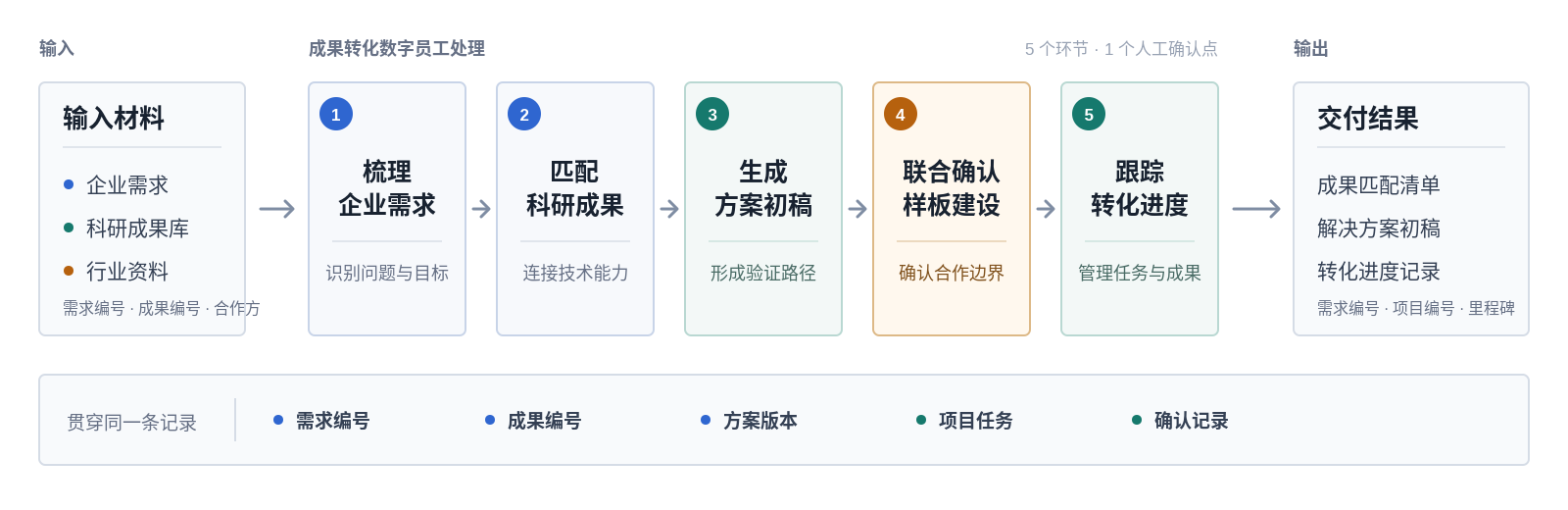
- The digital employee organizes company requirements by business use case, problem, goal, and constraint.
- It searches the repository for matching research outcomes, teams, technical capabilities, and industry precedents.
- It outlines technical approaches, what to verify, and the limits of the partnership, then drafts a digital employee solution and a pilot plan with verifiable results.
- The university and company confirm the technical scope, commercial terms, and pilot tasks.
- The digital employee creates tasks and milestones and tracks deliverables, project progress, and commercialization status.
Deliverables and partnership confirmation
Both parties receive a list matching requirements to research outcomes, a draft proposal, pilot tasks, and progress records. The university and company confirm the agreement, commercial terms, and technology transfer decisions. The draft proposal does not replace their decisions.