On this page
Financial Month-End Close Digital Employee
Once financial, attendance, and other required data are connected, a digital employee can calculate payroll under confirmed rules, prepare tax filing data, and collect reconciliation differences.
Finance and HR departments at insurers, chain businesses, and other enterprises can use this practice for monthly payroll calculation, tax filing preparation, and bank-to-ledger reconciliation.
Prepare month-end data and calculation rules
- Finance and HR staff provide OA approvals, attendance, finance and order records, bank reconciliation data, and payroll rules.
- Maintainers connect the required OA, HR, finance, attendance, and order systems and define what data can be read.
- Finance staff confirm the reporting month, which employees and amounts to include, allowances, and the basis for reporting in the filing template.
From data collection to exception review
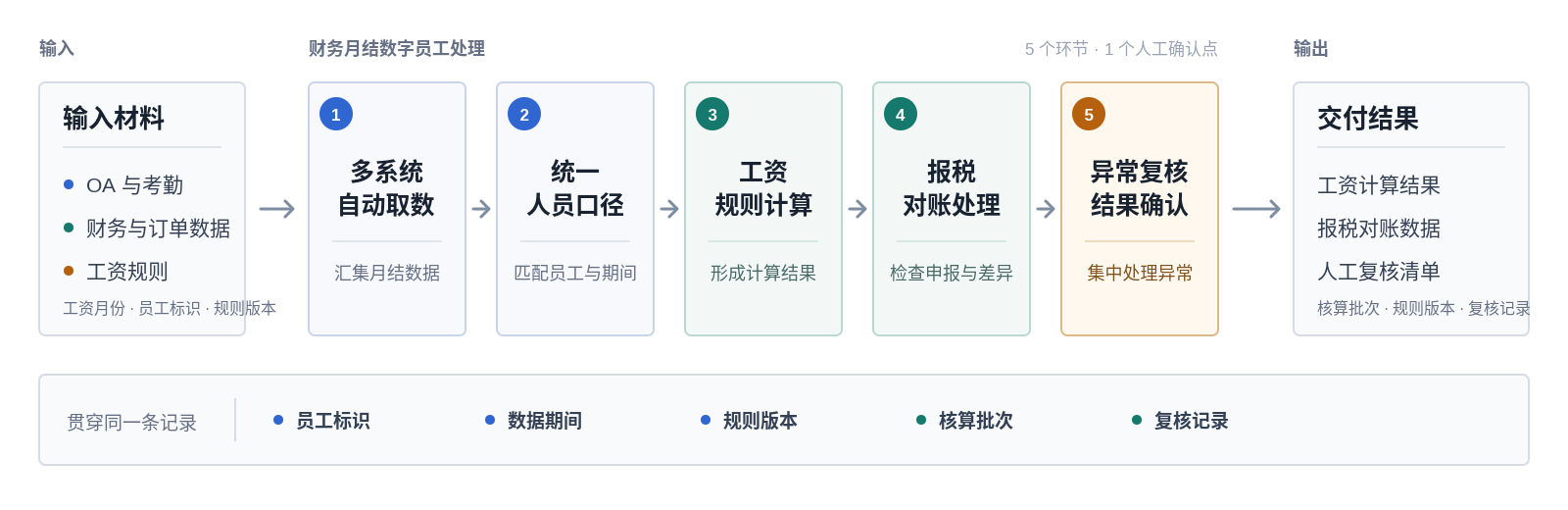
- The digital employee retrieves the current month's data from connected systems.
- It reconciles employee records and reporting periods using employee IDs, accounts, and months.
- It calculates wages, allowances, and related items under the confirmed rules.
- It organizes tax fields using the filing template and matches bank transactions against ledger entries.
- It summarizes differences in amounts, missing entries, and unmatched records. Finance staff review exceptions and adjustments before confirming the results.
Deliverables and release
The team receives payroll calculations, data for tax preparation, reconciliation details, and an exception list. The person responsible approves the final release of the payroll register. Completing the calculations does not replace finance review.